

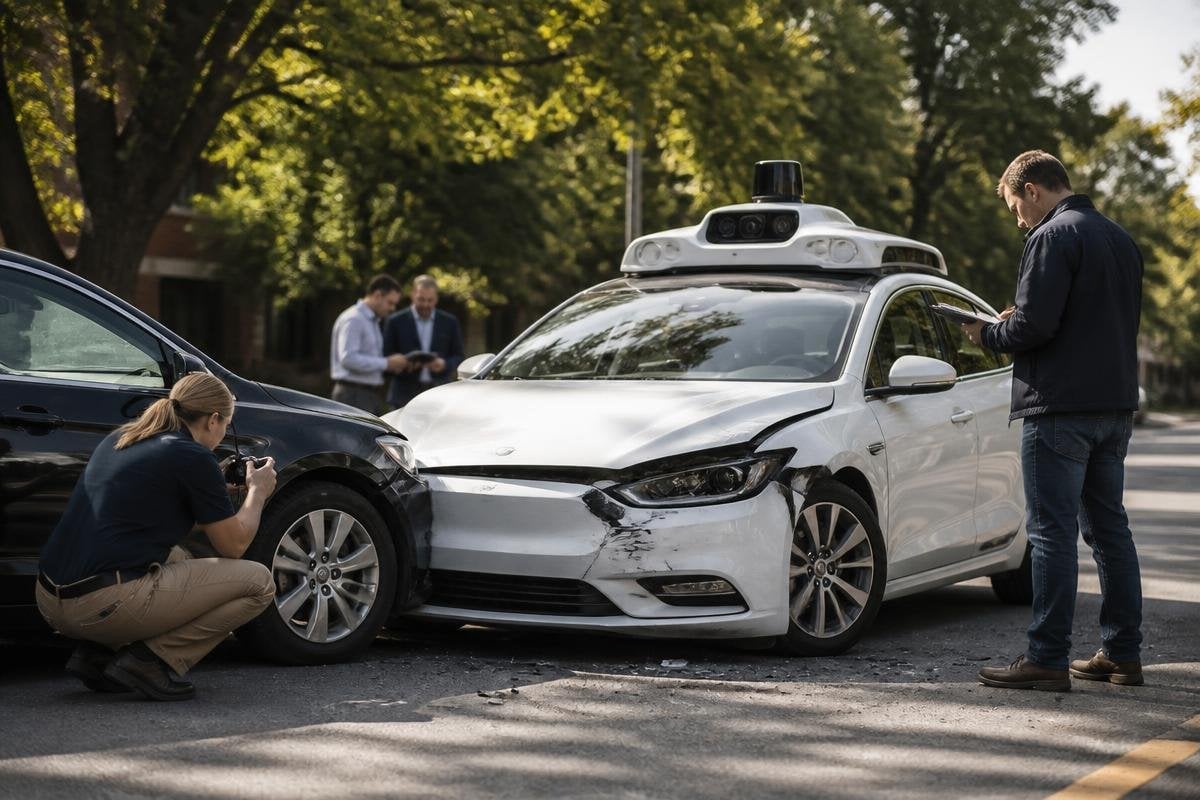
A crash involving a self-driving car rarely has one answer ready at the roadside. Responsibility can sit with the driver, the vehicle maker, a software supplier, a fleet operator, or more than one party, depending on what the car was doing and what people were told to expect.
If no crash report, vehicle data, or location is available, nobody can fairly assign blame. The useful starting point is to separate the crash itself from the decisions that allowed the car onto the road.
- Driver role: Was a person meant to watch the road and steer if needed?
- Vehicle system: Did the software, sensors, brakes, or steering work as designed?
- Evidence trail: What did the car record before and during the impact?
Start with the car’s operating mode
“Self-driving” covers several levels of automation. A car may keep its lane, adjust speed, or handle a route under limited conditions while still requiring a person to watch the road. A different system may run without a human ready to steer at every moment.
That difference changes the first question. Investigators need to know what the system was allowed to do at the time, where it was operating, and what the driver had been told about supervision.
A driver who was required to watch the road may face a different review from a passenger in a service designed to run without a driver. The label on the car matters less than the operating instructions and the system’s actual limits.
The evidence decides the path
A proper review would start with the vehicle’s event data, camera recordings, sensor logs, software version, maintenance records, and driver alerts. Those records can show the car’s speed, steering input, braking, warnings, and handoff requests before the crash.
The timing matters. If the system warned the driver to steer, investigators need to know how much time remained and whether the warning was clear. If the driver began steering, the record should show when that happened and what the car did next.
The same evidence can point toward a hardware problem. A blocked camera, failed brake part, poor repair, or damaged sensor may explain the crash without proving that the driving software caused it.
Reports on autonomous vehicles from Robot24.com robotics coverage can add named sensors, software versions, test conditions, and operator roles to the crash record. Those details help separate a hardware defect from a limit in the driving system before the next section sorts out who may pay.
Who may carry responsibility
The driver may carry responsibility when they ignored a clear supervision duty, used the system outside its stated limits, or steered in a way that caused the impact. That conclusion needs records, not the mere fact that automation was active.
The vehicle maker may face questions if the system failed during an approved task, gave poor warnings, or made a claim that did not match its real limits. A software supplier may enter the review when its code ran part of the driving system.
A fleet operator may also matter. The operator may have chosen the route, set maintenance rules, trained staff, or kept a vehicle in service after a known fault. Insurance and local law then decide how those facts become a claim or court case.
I’d reject any answer that names the driver or maker before checking the operating mode and the recorded timeline.
A practical crash review
Before accepting a blame claim, check these points:
- Name the jurisdiction: Liability rules differ by country and region.
- Record the mode: Write down the exact automation feature in use.
- Secure the data: Preserve event logs, video, alerts, and software details.
- Check the duty: Confirm what the driver, fleet, and maker each had to do.
- Review maintenance: Look for sensor damage, repairs, updates, and missed inspections.
- Compare the claim: Test public safety statements against the system’s written limits.
The next useful document is a dated crash report that connects each action to a recorded time. Until that record exists, “the car crashed” describes an event, not who must pay for it.
